
- admin
- October 24, 2026
- No Comments
Why Do We Have Dark Circles Under Our Eyes? 7 Causes, 4 Types and the Treatments Dermatologists Use
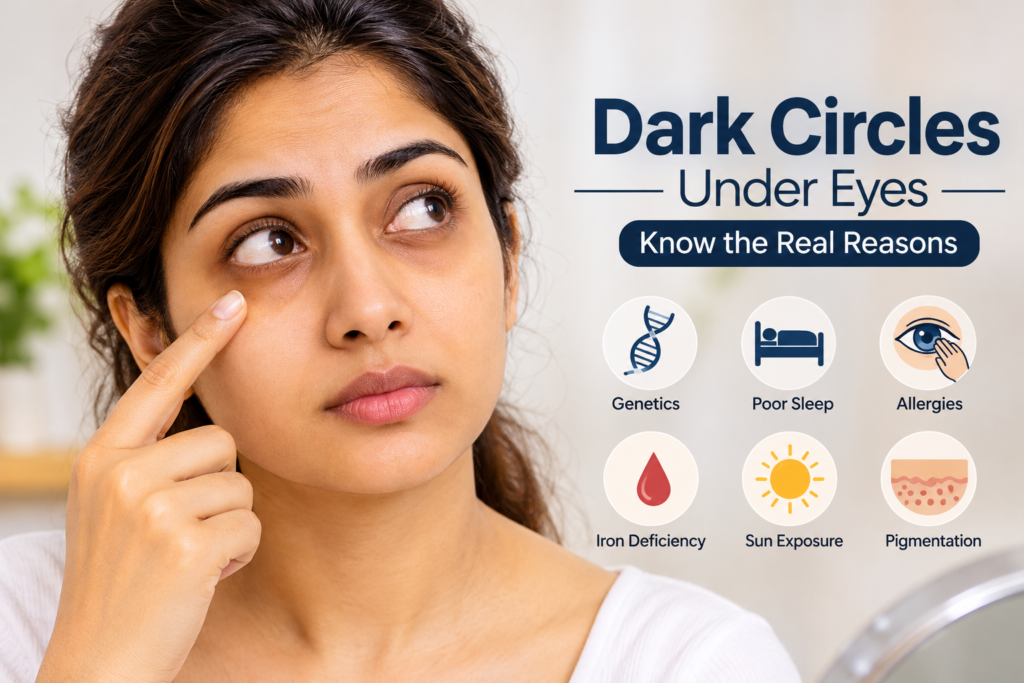
Eight hours of sleep, two litres of water a day, and the dark patches are still there in the bathroom mirror. That frustration brings a lot of people to our clinics, and it usually comes with the same question: why do we have dark circles under our eyes if we’re doing everything “right”?
The short answer is that tiredness is only one cause, and often not the main one. Dark circles come from pigment, blood vessels, skin thickness or the shape of the face itself. Each one needs a different fix, which is why a cream that worked wonders for your friend did nothing for you.
If you’d rather have someone look at your under-eye area in person, our team at Neo Genesis Hair & Skin Wellness sees patients in Park Circus, Newtown, Dumdum, Howrah and Serampore. You can book a consultation with a skin specialist in Kolkata and get a proper diagnosis before buying another product.
What Doctors Mean by Dark Circles Under Eyes
The medical term is periorbital hyperpigmentation, though not every case is actually pigment. The skin under your eyes is among the thinnest on the body, roughly a third as thick as the skin on your cheeks. So anything happening underneath it (blood flow, fat loss, colour changes) shows through far more easily than it would anywhere else.
7 Reasons Why Dark Circles Comes On
People search “why dark circles comes” when the patches appear seemingly overnight, but most build up slowly. Here are the seven causes we see most often.
1. Genetics
If your parents have them, you probably will too. Inherited dark circles often show up in childhood or the teens and are common in South Asian skin. They can be lightened, but expecting them to vanish completely isn’t realistic.
2. Extra pigment
Indian skin produces more melanin, and the under-eye area is prone to hyperpigmentation. Sun exposure makes it worse. So does constant rubbing, which triggers the skin to darken in self-defence.
3. Thin skin and ageing
After about 35, collagen and fat under the eyes start to thin out. The bluish veins beneath become more visible, and a hollow forms that catches shadow.
4. Allergies and eye rubbing
Allergic rhinitis, dust and seasonal pollen cause congestion that pools blood under the eyes. Doctors call these “allergic shiners”. Add itchy eyes and rubbing, and you get pigment on top of the puffiness.
5. Poor sleep and lifestyle
Lack of sleep doesn’t create dark circles by itself. It makes skin look paler and allows fluid to collect, so existing shadows look deeper. Smoking and heavy alcohol do something similar.
6. Iron deficiency
Iron-deficiency anaemia reduces oxygen in the blood, and the under-eye area can look grey or bluish. It’s particularly common among Indian women. A simple blood test will tell you.
7. Dehydration and certain medicines
Dehydrated skin looks dull and sunken. Some medications that widen blood vessels, and some eye drops used for glaucoma, can darken the area too.
The 4 Types of Dark Circles Under Eyes
Working out your type matters more than any product you choose. Try these quick checks in natural daylight.
- Pigmented (brown). Gently stretch the skin. If the colour stays the same, it’s pigment.
- Vascular (blue, purple or pink). The colour fades a little when stretched and often looks worse in the morning or after a cold.
- Structural, where a hollow below the eye casts a shadow. Tilt your face up towards a ceiling light. If the darkness mostly disappears, the shape of the area is the culprit, not the colour.
- Mixed. Honestly, this is what most adults have, usually pigment plus some hollowing.
Treatments That Actually Help
At-home care that’s worth your time
Start with sunscreen. A mineral SPF 30 or higher, applied gently right up to the lower lash line, does more for pigmented circles than most “eye creams”. Beyond that, cold compresses help vascular puffiness, and treating allergies properly stops the rubbing cycle.
Ingredients with decent evidence behind them include vitamin C, niacinamide, low-strength retinol and azelaic acid. Use them sparingly, because the skin here irritates easily.
One mistake we see repeatedly in Kolkata is people applying steroid-containing creams bought over the counter, or lemon juice, under their eyes. Both can leave the skin thinner or darker than before. Please don’t.
In-clinic options
For stubborn cases, a dermatologist may suggest:
- mild chemical peels to lift pigment gradually
- laser toning for brown, pigment-heavy circles
- PRP (platelet-rich plasma), which can improve skin quality and thickness over several sessions
- tear trough fillers using hyaluronic acid for structural hollows, done only by trained hands
The right choice depends on your type. A laser won’t fill a hollow, and a filler won’t fade pigment. This is exactly where a lot of money gets wasted.
Not sure which group you fall into? A short consultation with our skin specialist in Kolkata can answer that in one visit.
When to See a Doctor
See a doctor if dark circles appear suddenly, show up under only one eye, or come with swelling, itching that won’t settle, or tiredness that doesn’t improve with rest. These can point to allergies, anaemia or thyroid problems that need treatment beyond skincare.
Frequently Asked Questions
Why dark circles comes even after sleeping well?
Because sleep is rarely the root cause. Genetics, pigment, thin skin and under-eye hollows all create dark circles regardless of how much you rest.
Can dark circles under eyes go away permanently?
Pigmented and lifestyle-related circles can fade a lot with consistent treatment. Genetic and structural ones can be improved, but they usually need maintenance.
Does drinking water reduce dark circles?
It helps if dehydration is making your skin look dull and sunken. It won’t fix pigment or hollows.
Do screens cause dark circles?
Not directly. Long screen hours do lead to late nights, eye strain and rubbing, which can make existing circles look worse.
Which cream is best for dark circles?
There isn’t one answer. Vitamin C and niacinamide suit pigmented circles, while caffeine-based products give vascular puffiness a temporary boost. Ask a dermatologist before trying anything stronger.
Are under-eye fillers safe?
In experienced hands, they’re generally safe for structural hollows. Results typically last several months to over a year, depending on the product.
Get the Right Answer for Your Skin
If your circles are brown, focus on sun protection and pigment-targeting care. If they’re blue or hollow, creams alone won’t do much, and an in-clinic assessment will save you months of guessing. The team at Neo Genesis Hair & Skin Wellness can check your type, rule out medical causes, and plan treatment at the branch closest to you. Book your visit with us and stop paying for products that don’t match your problem.
