
- admin
- November 11, 2026
- No Comments
Uneven Face Skin Texture Causes, Types and Treatments That Actually Work
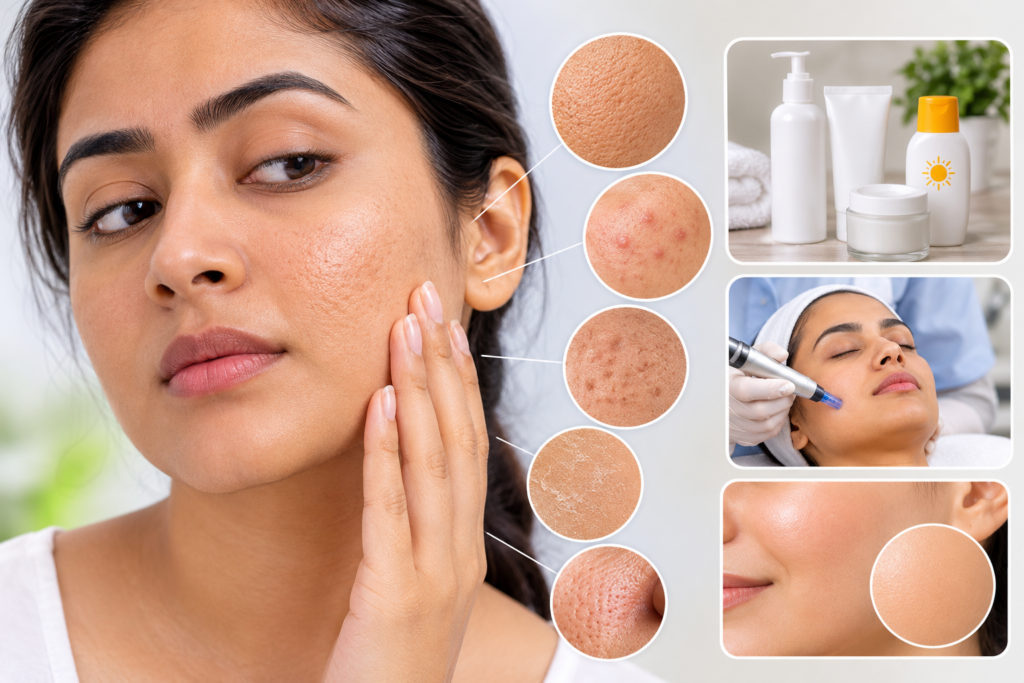
Uneven face skin texture comes from clogged pores, acne scars, sun damage, slow cell turnover and dryness. Mild cases improve with gentle exfoliation, moisturiser and daily sunscreen. Stubborn texture usually needs retinoids, chemical peels or microneedling under a dermatologist’s guidance.
Run your fingers across your cheek in daylight and you’ll know within seconds whether your face skin texture is smooth or not. Bumps, rough patches, large pores and tiny dents are far more common than people admit. They rarely respond to a random scrub.
The right fix depends on what’s driving the problem. This guide covers the causes, the main types, how to improve skin texture naturally, and the clinic options that make a real difference.
What is face skin texture?
Face skin texture is how the surface of your skin looks and feels, from smooth to bumpy, rough, dry or pitted. Pore size, oil production, the speed at which dead cells shed and the collagen beneath the surface all shape it. When shedding slows, dead cells pile up and the surface turns uneven.
Causes of uneven face skin texture
Most people have more than one cause at work.
- Clogged pores from oil and dead cells, which lead to blackheads, whiteheads and pimples on the face
- Acne scarring. Deep or picked breakouts can leave pits that last for years.
- Years of UV exposure without sunscreen. This thickens the outer layer and breaks down collagen, a process known as photoaging.
- Slower cell turnover as you get older
- A damaged skin barrier or dehydration, which makes skin look flaky and rough
- Hormones, stress and poor sleep, all of which can push oil production up
- Harsh products such as gritty scrubs, or exfoliating too often
- Genetics, especially for small keratin bumps and large pores
Types of textured skin
Type | What it looks like | Usual cause |
Rough, dry patches | Flaky, dull surface | Dehydration, weak barrier |
Small bumps | Sandpaper feel on cheeks | Keratin plugging hair follicles (keratosis pilaris is the classic example) |
Clogged pores | Blackheads, whiteheads | Excess oil and dead cells |
Enlarged pores | Visible openings, often on the nose and cheeks | Oil, genetics, sun, age |
Acne scars | Dips or raised marks | Past inflamed breakouts |
Each type needs a different textured skin treatment, which is why guessing wastes months. A peel that clears blackheads won’t do much for a deep scar.
How to improve skin texture naturally
Gentle, steady habits do most of the work. Expect weeks, not days.
- Cleanse twice a day with a mild cleanser. Skip anything with crushed shells or seeds.
- Exfoliate with a lactic or salicylic acid product once or twice a week to start. Chemical exfoliation is gentler than scrubbing.
- Moisturise, even if your skin is oily. A dry, stressed barrier makes texture look worse.
- Wear sunscreen of SPF 30 or higher every morning and reapply when outdoors.
- Sleep properly and drink enough water. It sounds basic because it works.
- Keep your hands off your face. Picking is the fastest route to scars.
Lemon juice, toothpaste and sugar scrubs are popular home fixes. Skip them. They irritate skin far more than they smooth it.
That routine is the base of how to improve skin texture naturally, and it makes any clinic procedure work better.
Uneven skin texture treatment at a clinic
If eight to twelve weeks of home care hasn’t helped, see a dermatologist. A good uneven skin texture treatment plan starts by identifying your type. Rough skin and dark circles under our eyes often show up together on tired faces, but they need different approaches.
Skin smoothing treatment options dermatologists use
Which textured skin treatment suits you depends on how deep the problem sits.
- Prescription retinoids. Retinoids speed up cell turnover. They can cause dryness and peeling at first, and they aren’t for use in pregnancy.
- Chemical peels. A chemical peel with glycolic, salicylic or mandelic acid loosens dead cells and evens the surface.
- Microneedling. Microneedling creates tiny controlled punctures that trigger collagen repair. It’s often used for scars and large pores.
- Fractional laser resurfacing. Reserved for deeper scarring or sun damage.
- Hydrafacial or microdermabrasion. These are mild polishing treatments for dull, congested skin.
Most skin smoothing treatment plans run as a course of several sessions, with sunscreen in between, not one visit. Darker Indian skin tones can develop dark marks after aggressive procedures, so ask about settings and aftercare before you agree to anything.
When to see a skin specialist
Book a consultation if bumps are painful, itchy or spreading, scars are getting deeper, or nothing has changed after two to three months. A skin care treatment in Kolkata should begin with an assessment of your skin type and history, not a ready-made package. You can contact Neo Genesis Hair & Skin Wellness to book one.
Frequently asked questions
Can uneven face skin texture be fixed permanently?
Mostly improved, rarely fixed forever. Clogged-pore texture can stay clear with maintenance. Scars and sun damage soften with treatment, but they need ongoing care and sunscreen.
Why is my face suddenly bumpy?
A new product, hormonal changes, humidity or heavy sweat blocking pores are the usual triggers. Stop new products first. If the bumps are painful, spreading or last more than a few weeks, get them checked.
Which textured skin treatment is best?
There’s no single best option. Peels suit clogged pores and dullness, microneedling suits scars and enlarged pores, and retinoids help most types over time. A dermatologist can match the treatment to your type.
How long does a skin smoothing treatment take to show results?
Peels and polishing facials often show a glow within days, but visible smoothing usually builds over a series of sessions. Retinoids typically need around three months.
Does exfoliating every day improve skin texture?
No. Daily exfoliation can damage the barrier and make texture worse. One to three times a week is enough for most people.
Do home remedies like besan or lemon work for rough skin?
Besan is mild and fine as an occasional cleanser. Lemon is too acidic for facial skin and can cause irritation or dark marks.
