
- admin
- September 17, 2026
- No Comments
Bacterial Skin Infection Symptoms, Causes, and How to Treat It
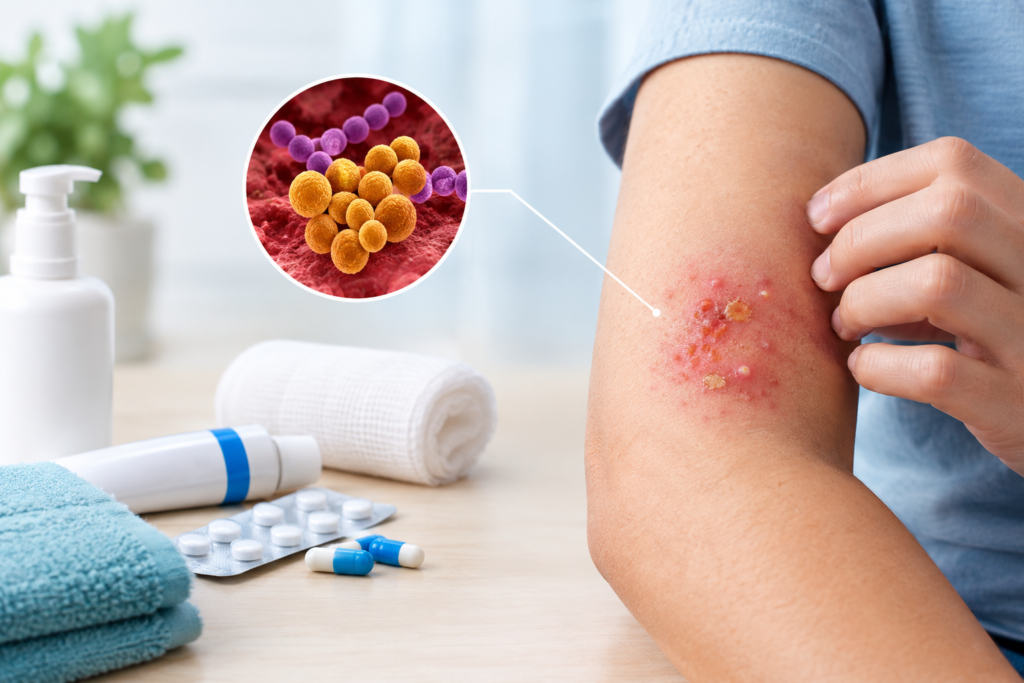
Our skin acts as the body’s first line of defense, but even this shield can get compromised. A bacterial skin infection develops when bacteria, usually Staphylococcus or Streptococcus species, enter through a cut, insect bite, or damaged patch of skin and start multiplying faster than your immune system can keep up with. It’s one of the most common reasons people book a dermatology visit, and while many cases clear up with basic care, some can turn serious if you wait too long to treat them.
In this guide, we’ll walk through the symptoms, causes, and types of skin infections you should know about, plus how doctors typically treat and prevent them.
What Is a Bacterial Skin Infection?
A bacterial infection on skin happens when harmful bacteria breach the outer layer of skin, the epidermis, and settle into the deeper tissue underneath. Your skin is normally home to countless harmless bacteria, but a break in the surface, whether from shaving, eczema, a wound, or even a mosquito bite, gives opportunistic strains a way in.
Not every case looks the same. Some infections stay confined to a small patch of skin, while others spread quickly across a limb or keep coming back if the underlying cause isn’t addressed.
Common Symptoms of a Bacterial Skin Rash and Infection
Symptoms vary depending on the type and how advanced it is, but a few warning signs show up again and again:
- Redness or a bacterial skin rash that keeps spreading outward
- Swelling, warmth, or tenderness around the affected patch
- Pus-filled bumps, blisters, or yellowish crusting
- Pain that gets worse instead of settling down
- Fever or chills once the infection is more advanced
- Swollen lymph nodes near the affected site
If a rash is spreading fast, feels hot to the touch, or shows up alongside fever, it’s worth getting it checked rather than waiting it out at home.
What Causes a Bacterial Infection on the Skin?
Most cases trace back to two bacteria, Staphylococcus aureus and Streptococcus pyogenes. Both live harmlessly on healthy skin most of the time, but they take advantage the moment there’s an opening. Common triggers include:
- Cuts, scrapes, or surgical wounds
- Insect bites or animal scratches
- Existing skin conditions like eczema or psoriasis that crack the skin barrier
- Poor hygiene or prolonged moisture from sweat and tight clothing
- A weakened immune system due to diabetes, chemotherapy, or similar conditions
- Close skin-to-skin contact, common in contact sports
According to the NCBI overview of microbial skin infections, Staphylococcus aureus and group A streptococci remain the two most frequent bacteria behind primary skin infections worldwide.
Types of Skin Infections: Bacterial vs Viral
Knowing the different types of skin infections helps you figure out what you might actually be dealing with, and whether antibiotics will even help in the first place.
Common Types of Bacterial Skin Infections
- Impetigo: highly contagious, common in children, marked by honey-colored crusts around the nose and mouth
- Cellulitis: a deeper infection reaching the dermis and tissue below, often affecting the legs
- Folliculitis: inflamed hair follicles that look like small red or pus-filled bumps
- Boils and carbuncles: painful, pus-filled lumps that form under the skin
- Erysipelas: a sharply defined, raised, fiery-red patch usually on the face or lower legs
Bacterial vs Viral Skin Infections: What’s the Difference?
People often lump bacterial and viral skin problems together, but they behave quite differently. Bacterial viral skin infections isn’t really one single category. A skin issue is usually caused by one or the other, though occasionally a viral infection like chickenpox picks up a secondary bacterial infection on top of it. Viral infections such as warts, cold sores, or shingles don’t respond to antibiotics at all, while bacterial ones usually do, which is exactly why getting an accurate diagnosis matters before starting any treatment.
How Bacterial Skin Infections Are Diagnosed and Treated
Treatment depends largely on how deep and widespread the infection is:
- Topical antibiotics: creams or ointments for mild, surface-level cases like small patches of impetigo
- Oral antibiotics: prescribed for infections such as cellulitis or larger impetigo outbreaks
- Drainage: boils and abscesses often need to be lanced and drained rather than treated with medication alone
- IV antibiotics: reserved for severe or fast-spreading infections, especially in people with weakened immunity
- Wound care: keeping the area clean and properly covered speeds up healing and limits spread
The clinical review on cellulitis in NCBI’s StatPearls collection notes that this single type of bacterial skin infection accounts for millions of outpatient visits every year, which says a lot about how common these infections really are, and why early treatment matters.
Prevention Tips for Bacterial Skin Infections
Most bacterial skin infections are preventable with a handful of consistent habits:
- Wash cuts and scrapes right away with soap and water
- Keep wounds covered with a clean, dry bandage until fully healed
- Avoid sharing towels, razors, or other personal items
- Change out of sweaty clothes soon after exercise
- Moisturize regularly to prevent cracked, dry skin that bacteria can enter through
- Manage underlying conditions like diabetes or eczema with your doctor’s guidance
The CDC’s guidance on preventing staph and MRSA infections echoes much of this. Good hygiene and prompt wound care remain the simplest, most effective ways to stop bacteria from taking hold in the first place.
When Should You See a Dermatologist in Kolkata?
Mild infections often clear up with home care, but don’t wait it out if the rash keeps spreading, pus builds up, fever sets in, or the infection keeps returning. A dermatologist in Kolkata can properly identify which bacteria is involved, prescribe the right antibiotic, and rule out other skin conditions that mimic a bacterial infection. Self-treating with random creams or leftover antibiotics often does more harm than good, particularly with antibiotic resistance becoming more common.
Frequently Asked Questions
Can a bacterial skin infection heal on its own?
Very mild cases sometimes improve with basic hygiene, but most benefit from antibiotics. Left untreated, an infection can spread or get worse.
Is a bacterial skin infection contagious?
Yes, several types, impetigo especially, spread easily through direct contact or shared items like towels and clothing.
How long does it take to treat a bacterial skin infection?
Most cases respond to antibiotics within 7 to 10 days, though deeper infections such as cellulitis can take longer to fully clear up.
Can stress trigger a bacterial skin rash?
Stress on its own doesn’t cause infection, but it can weaken immunity and slow healing, making it easier for bacteria to take hold.
What’s the difference between a fungal and bacterial skin infection?
Fungal infections tend to be itchy, scaly, and ring-shaped, while a bacterial infection is more often red, swollen, warm, and pus-filled.
A bacterial skin infection is rarely something to panic over, but it isn’t something to shrug off either. Catching the early symptoms, understanding what caused it, and getting the right treatment can be the difference between a quick recovery and a stubborn problem that keeps coming back. When in doubt, a proper diagnosis beats guesswork every time.
