
- admin
- September 24, 2026
- No Comments
Benefits of Lukewarm Water for Hair and Skin — Why It Matters More in Serampore's Climate
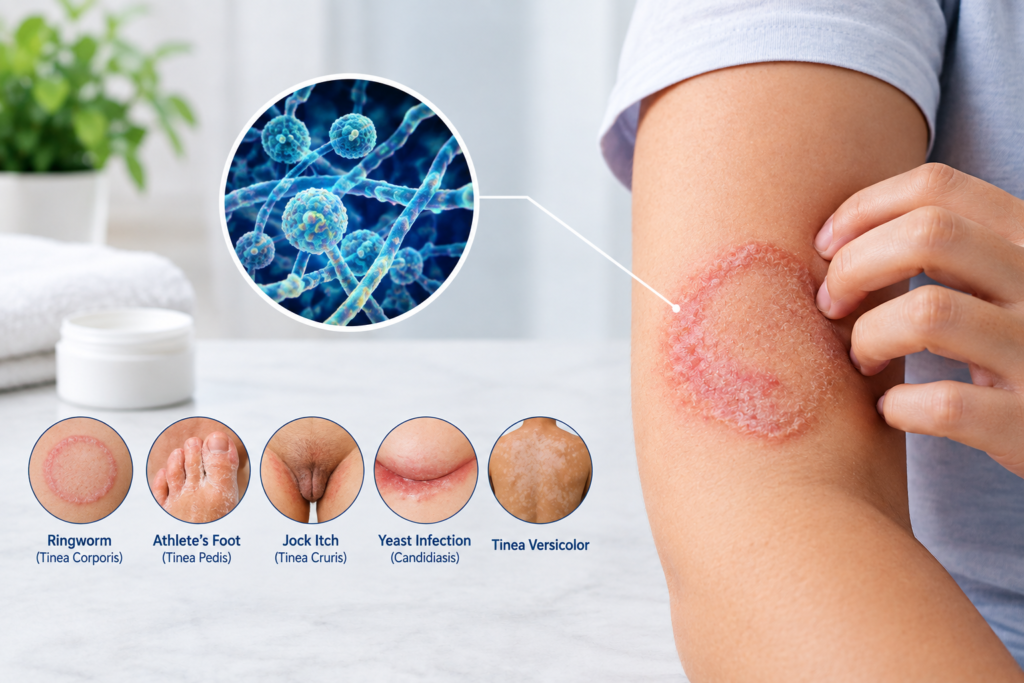
That itchy red patch that just won’t quit could be more than ordinary dry skin. A fungal skin rash develops when microscopic fungi multiply faster than your skin’s natural defenses can keep up with, usually in warm, damp folds of the body. It is one of the most common reasons people book a dermatology visit, yet it often gets mistaken for eczema, an allergic reaction, or even a viral rash. Knowing what triggers it, how to spot it early, and which treatment actually works can save weeks of discomfort and repeat trips to the pharmacy.
What Causes a Fungal Skin Rash?
Fungi live almost everywhere: in soil, on surfaces, and naturally on human skin in small, harmless numbers. Trouble starts once conditions shift enough to let them multiply unchecked. Among fungi caused diseases, skin infections are by far the most common, largely because fungi on skin find an ideal home wherever it stays warm, sweaty, and poorly ventilated. According to the CDC, more than a billion people worldwide pick up some form of fungal infection every year, and skin is one of the most frequently affected areas.
Typical triggers include:
- Heavy sweating or tight, non-breathable clothing
- Sharing towels, socks, or shoes with an infected person
- Close contact with pets carrying ringworm
- A weakened immune system from illness, stress, or certain medications
- Long-term use of antibiotics or steroid creams, which disturb the skin’s natural balance
- Humid weather or limited hygiene in skin folds such as the underarms, groin, or between the toes
How to Recognize a Fungal Skin Rash
Symptoms vary by location and severity, but a few signs show up again and again:
- Red or discoloured patches with a raised, scaly border
- Persistent itching, often worse at night
- Peeling, cracking, or flaking skin
- A ring-shaped mark that spreads outward from the centre
- Small blisters or pus-filled bumps in more severe cases
- A musty or faintly unpleasant smell in affected folds
If more than one of these signs appear together, especially in a warm skin fold, a fungal cause is worth suspecting before anything else.
Common Types of Skin Disease by Fungus
Not every skin disease by fungus looks the same. Location and the specific organism involved shape how the rash behaves. Research published in PMC’s review of global dermatophytosis estimates that roughly a fifth to a quarter of the world’s population deals with some form of this condition at any given time.
Ringworm (Tinea Corporis)
Despite the name, no worm is involved. This is a classic example that forms a circular, red, scaly ring spreading outward as the centre clears.
Athlete’s Foot (Tinea Pedis)
Common between the toes and along the soles, causing itching, cracking, and sometimes a burning sensation, especially after time spent in closed shoes.
Jock Itch (Tinea Cruris)
Affects the groin and inner thighs, particularly in people who sweat heavily or wear tight clothing during exercise.
Yeast Infections (Candidiasis)
Caused by an overgrowth of Candida, showing up as red, moist patches often found in skin folds, under the breasts, or in the diaper area of infants.
Tinea Versicolor
Produces small, discoloured patches, lighter or darker than surrounding skin, most noticeable on the chest, back, and shoulders after sun exposure.
Fungal Skin Rash vs Skin Virus Infection: Know the Difference
People often confuse the two, but a fungal rash and a skin virus infection behave quite differently. A fungal rash tends to spread slowly outward with a defined, scaly border and rarely comes with fever. A skin virus infection, such as chickenpox, shingles, or warts, usually appears as fluid-filled blisters and may be accompanied by fever or body aches, following a different healing timeline entirely. Since both can look similar in early stages, a proper examination is the only reliable way to tell them apart.
Treatment Options That Actually Work
Most mild cases respond well to consistent, correctly chosen treatment:
- Over-the-counter antifungal creams such as clotrimazole or terbinafine for localized rashes
- Prescription oral antifungals for widespread or stubborn infections
- Keeping the affected area clean and completely dry after every wash
- Antifungal powders for shoes, socks, and skin folds prone to moisture
- Avoiding tight, synthetic fabrics until the rash has fully cleared
Self-treating based on a guess can backfire, particularly if what looks like ringworm turns out to be viral instead. Getting an accurate diagnosis from a qualified skin treatment clinic in Kolkata before starting long-term treatment saves both time and unnecessary expense.
Prevention Tips to Keep Fungal Infections Away
- Dry skin folds thoroughly after bathing, swimming, or sweating
- Choose breathable cotton clothing and moisture-wicking socks
- Avoid sharing towels, razors, combs, or footwear
- Change out of wet swimwear or gym clothes as soon as possible
- Wipe down shared gym mats, showers, and locker room floors
- Treat pets promptly if they show signs of ringworm or hair loss
When Should You Visit a Dermatologist?
A rash that doesn’t improve within two weeks of over-the-counter treatment, keeps returning, or spreads rapidly deserves professional attention. A trusted Skin Treatment Clinic in Kolkata can run a quick skin scraping or KOH test to confirm whether the issue is truly fungi on skin or an unrelated inflammatory condition, then recommend treatment suited to the exact diagnosis rather than guesswork.
Frequently Asked Questions
Can a fungal skin rash spread to other people?
Yes. Most cases spread through direct skin contact or shared items like towels and footwear, so keeping personal items separate during an active infection helps prevent transmission.
How long does a fungal skin rash take to heal?
Mild cases often clear within two to four weeks of consistent antifungal treatment, while deeper or recurring infections may take longer and sometimes need prescription medication.
Is a fungal skin rash the same as a skin virus infection?
No. They have different causes and appearances. A skin virus infection typically involves fluid-filled blisters and systemic symptoms, while a fungal rash usually stays localized with a scaly, expanding border.
Can diet or lifestyle affect fungal skin infections?
Excess sugar intake, chronic stress, and poor hygiene habits can all make skin more hospitable to fungal overgrowth, though hygiene and moisture control matter most.
Are fungal skin rashes contagious from pets?
Yes, particularly ringworm, which pets can carry without obvious symptoms and pass on through direct contact.
A fungal skin rash is uncomfortable but rarely serious when caught early and treated correctly. Understanding the causes, recognising the symptoms, and knowing when self-care isn’t enough makes all the difference between a quick recovery and a rash that keeps coming back. When in doubt, a proper diagnosis beats guesswork every time.
