10 Questions to Ask Before Choosing a Hair Specialist in Kolkata
Choosing a Hair Specialist in Kolkata: 10 Questions You Must Ask First admin July 28, 2026 No Comments Hair loss,...
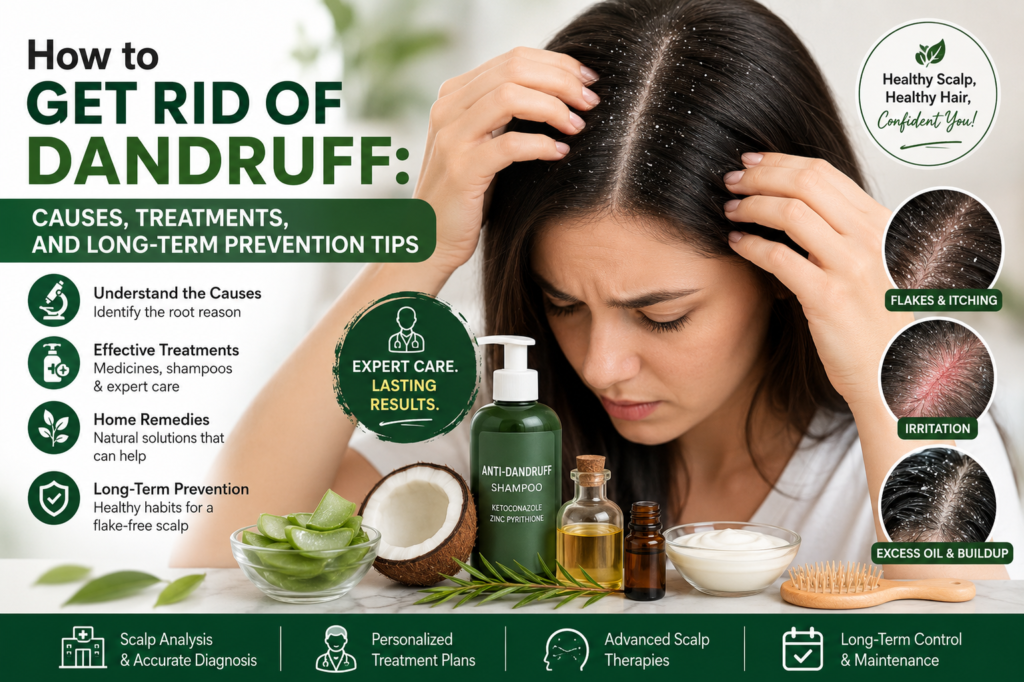
Wondering how to get rid of dandruff without it coming back again and again? Dandruff is one of the most common scalp concerns affecting people of all ages. It can cause itching, visible flakes, irritation, and even embarrassment in social situations. While occasional flakes may seem harmless, persistent dandruff often indicates an underlying scalp issue that requires proper attention.
The good news is that with the right dandruff treatment, healthy scalp habits, and expert guidance when needed, you can effectively control dandruff and significantly reduce its recurrence. This guide explains the causes, effective treatments, prevention strategies, and when you should visit a scalp treatment clinic in Kolkata for professional care.
Understanding the cause is the first step in learning how to reduce dandruff effectively. Common reasons include:
Different causes require different treatment approaches, which is why identifying the root cause is essential.
Signs that indicate you may need proper dandruff treatment include:
If these symptoms continue for several weeks despite regular care, consulting a dandruff treatment specialist in Kolkata is recommended.
There isn’t a one-size-fits-all dandruff solution, but combining proper scalp care with targeted treatments often delivers the best results.
Look for ingredients like:
These ingredients work differently to reduce fungal growth, remove dead skin cells, and calm scalp inflammation.
Washing your hair regularly helps remove:
Maintaining scalp hygiene is one of the simplest ways to support effective anti dandruff treatment.
Strong chemical-based styling products may irritate the scalp and worsen dandruff. Choose gentle shampoos and conditioners suitable for your scalp type.
Your scalp health reflects your overall nutrition.
Include foods rich in:
Proper nutrition supports skin renewal and may help improve scalp health over time.
Many people also try home remedies for dandruff alongside medical care. While these remedies may help mild cases, they should not replace professional treatment for persistent dandruff.
Popular options include:
These remedies may temporarily soothe itching and dryness, but scientific evidence varies regarding their long-term effectiveness.
While home remedies for dandruff may help soothe mild scalp irritation, they are not always effective for every type of dandruff. People with oily scalps, for instance, may develop wet dandruff, where excess sebum causes flakes to become sticky and cling to the scalp instead of shedding naturally. Identifying the type of dandruff is essential for choosing the most suitable treatment approach.
Many people search for a permanent solution for dandruff at home, but it’s important to understand that dandruff often behaves like a chronic condition.
Home care can control symptoms, but permanent results depend on:
Rather than expecting an instant cure, focus on long-term scalp maintenance.
If you’re wondering how to cure dandruff permanently, the answer depends on what’s causing it.
Professional evaluation can identify conditions such as:
Once the exact cause is diagnosed, your dermatologist can recommend a personalized treatment plan that offers longer-lasting control.
You should consider visiting a scalp treatment clinic in Kolkata if:
Professional scalp analysis helps identify the exact problem and avoids unnecessary trial-and-error treatments.
A qualified dandruff treatment specialist in Kolkata can provide the following:
Personalized treatment often delivers better and faster results than self-medication.
Preventing dandruff is easier than treating repeated flare-ups.
Follow these simple habits:
These habits contribute to healthier scalp function and reduce the chances of recurring dandruff.
Learning how to get rid of dandruff starts with understanding its root cause. While mild dandruff may improve with good scalp care and appropriate shampoos, persistent or severe cases often require professional attention. Instead of relying only on temporary fixes or searching endlessly for a dandruff solution, focus on a combination of healthy habits, suitable dandruff treatment, and expert guidance.
If dandruff continues despite your efforts, consulting a trusted scalp treatment clinic in Kolkata or an experienced dandruff treatment specialist in Kolkata can help you achieve healthier, flake-free hair with a personalized treatment plan.
Using a medicated anti-dandruff shampoo, maintaining proper scalp hygiene, and identifying the underlying cause are usually the fastest approaches.
They may help mild dandruff by reducing dryness or irritation, but persistent dandruff often requires professional evaluation and treatment.
Most medicated shampoos are used two to three times a week initially, but follow your dermatologist’s recommendations.
Home care can effectively control symptoms, but permanent results depend on treating the root cause and maintaining a healthy scalp.
You should seek professional care if dandruff persists for several weeks, worsens, or is associated with severe itching, redness, or hair loss.
Yes. Stress may trigger or aggravate dandruff by affecting the skin’s natural balance and immune response.
Dandruff itself doesn’t directly cause hair loss, but persistent inflammation and excessive scratching can contribute to increased hair shedding.
Yes. A specialized clinic can diagnose the exact cause and recommend personalized treatments to manage recurring dandruff effectively.