10 Questions to Ask Before Choosing a Hair Specialist in Kolkata
Choosing a Hair Specialist in Kolkata: 10 Questions You Must Ask First admin July 28, 2026 No Comments Hair loss,...
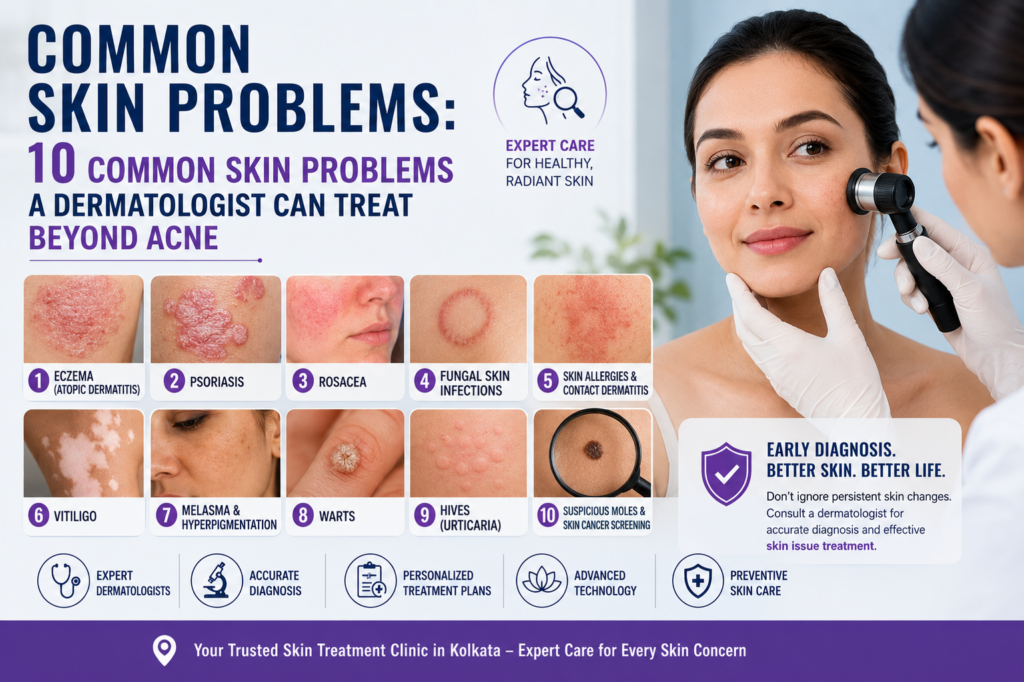
Most people associate dermatologists with acne treatment, but acne is only one of many common skin problems that require professional care. From persistent itching and unexplained rashes to pigmentation and chronic skin disorders, a qualified dermatologist can diagnose the root cause and recommend effective treatment before the condition worsens.
If you are experiencing ongoing skin concerns, consulting a dermatologist in Kolkata at a trusted skin treatment clinic in Kolkata can help you receive an accurate diagnosis and personalized care.
Your skin often reflects your overall health. While some conditions may seem harmless initially, untreated skin disorders can become more severe over time. Early diagnosis helps:
Professional skin issue treatment focuses on identifying the underlying cause instead of simply treating visible symptoms.
Eczema is one of the most common skin conditions affecting both children and adults. It causes inflammation, dryness, redness, and intense itching.
A dermatologist may recommend medicated creams, moisturizers, and lifestyle modifications based on the severity.
Psoriasis is a chronic autoimmune condition that speeds up skin cell production, leading to thick, scaly plaques.
Early diagnosis helps manage flare-ups and reduce symptoms effectively.
Rosacea is frequently mistaken for acne because both conditions involve redness and bumps. However, rosacea requires a different treatment approach.
Professional diagnosis is important to prevent progression.
Fungal infections thrive in warm and humid environments and spread easily if left untreated.
Examples include:
Proper skin issue treatment usually includes antifungal medications and preventive skin care advice.
Many people develop allergic reactions after exposure to cosmetics, metals, detergents, or plants.
A dermatologist identifies the trigger and recommends appropriate treatment to prevent recurring reactions.
Vitiligo causes patches of skin to lose their natural pigment due to the destruction of melanocytes.
Although not contagious, it may affect confidence and emotional well-being.
Treatment options may include:
Uneven skin tone is among the most common cosmetic concerns treated by dermatologists.
Common causes include:
A customized treatment plan can help reduce pigmentation safely while preventing recurrence.
Warts develop due to certain strains of the human papillomavirus (HPV). They may appear anywhere on the body and sometimes spread through direct contact.
Treatment options include:
Avoid removing warts at home, as improper treatment may lead to infection or scarring.
Hives appear as raised, itchy welts caused by allergic reactions, infections, medications, or stress.
A dermatologist evaluates whether the condition is acute or chronic before recommending appropriate medication and lifestyle modifications.
Changes in moles should never be ignored.
Watch for:
While changes in moles should always be evaluated by a dermatologist, it’s also important to remember that not every visible skin change is caused by a skin disorder. In some cases, discoloration, bulging veins, or changes in skin texture may indicate vascular conditions rather than dermatological ones. Understanding skin changes that could signal a vein problem and how they differ from common skin conditions can help ensure timely diagnosis and appropriate treatment.
You should consider scheduling an appointment if you experience:
Seeking timely care can prevent minor concerns from developing into more serious skin disorders.
Selecting an experienced skin treatment clinic in Kolkata ensures accurate diagnosis and evidence-based treatment. A qualified dermatologist in Kolkata will create a personalized treatment plan based on your skin type, medical history, and specific condition.
Look for a clinic that offers:
While acne receives the most attention, many other common skin problems require expert medical care. Conditions such as eczema, psoriasis, rosacea, fungal infections, pigmentation, and allergic reactions often need specialized diagnosis and treatment for long-lasting relief.
If you notice persistent skin changes, don’t rely solely on home remedies. Consulting an experienced dermatologist in Kolkata at a trusted skin treatment clinic in Kolkata can help identify the underlying cause and provide effective skin issue treatment tailored to your needs.
Dermatologists commonly treat eczema, psoriasis, rosacea, fungal infections, pigmentation, vitiligo, hives, warts, allergic skin reactions, and various skin disorders.
You should visit a dermatologist in Kolkata if you have persistent rashes, itching, unusual moles, recurring infections, pigmentation, or any skin condition that does not improve with basic care.
Yes. A professional skin treatment clinic uses clinical examination and diagnostic tools to identify various skin disorders and recommend suitable treatment.
No. Many common skin conditions can be effectively managed or completely treated with early diagnosis and appropriate medical care.
Home remedies may provide temporary relief for minor concerns, but persistent or recurring skin problems should always be evaluated by a dermatologist for proper diagnosis and treatment.
Maintaining good hygiene, protecting your skin from excessive sun exposure, following a healthy skincare routine, and consulting a dermatologist when symptoms appear can help reduce the risk of many skin conditions.