10 Questions to Ask Before Choosing a Hair Specialist in Kolkata
Choosing a Hair Specialist in Kolkata: 10 Questions You Must Ask First admin July 28, 2026 No Comments Hair loss,...
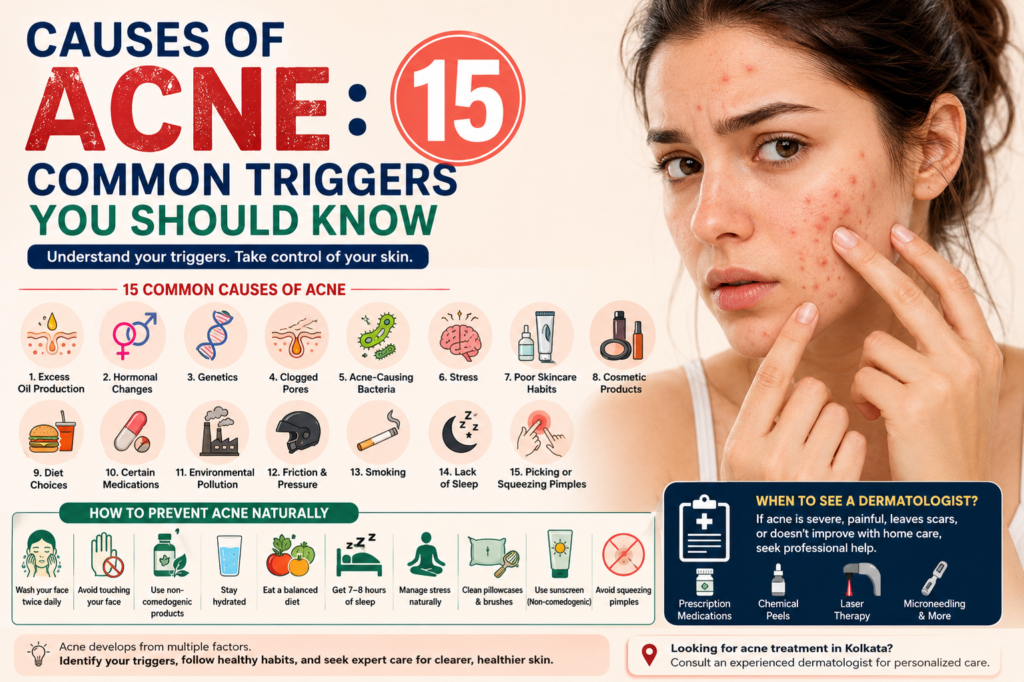
Acne is one of the most common skin concerns affecting teenagers and adults alike. Understanding the causes of acne is the first step toward achieving healthier, clearer skin. While occasional breakouts are normal, persistent acne often develops due to a combination of internal and external factors. Knowing the reasons for acne can help you make informed lifestyle choices and seek the right treatment when needed.
Let’s explore the 15 most common triggers behind acne and learn how to prevent acne naturally.
Acne develops when hair follicles become clogged with excess oil (sebum), dead skin cells, and bacteria. This blockage results in whiteheads, blackheads, pimples, cysts, or nodules. The causes of pimples can vary from person to person, making it important to identify your personal triggers.
Overactive sebaceous glands produce too much oil, which mixes with dead skin cells and blocks pores. This is one of the leading causes of acne.
Hormonal fluctuations during puberty, menstruation, pregnancy, or menopause increase oil production. This explains why hormonal acne is common among both teenagers and adults.
If your parents experienced frequent breakouts, you may be genetically predisposed to acne. Family history plays a significant role in determining your skin’s oil production and inflammatory response.
Dead skin cells that are not shed properly accumulate on the skin’s surface, blocking pores and creating an environment where acne-causing bacteria thrive.
The bacterium Cutibacterium acnes naturally lives on the skin. When trapped inside blocked pores, it multiplies rapidly and causes inflammation.
Stress doesn’t directly cause acne but can worsen existing breakouts by increasing cortisol levels, which stimulate oil glands.
Using harsh cleansers, skipping cleansing after sweating, or sleeping with makeup can contribute to clogged pores and increase the causes of pimples.
Heavy or comedogenic makeup and skincare products may block pores, especially if they are not labeled “non-comedogenic.”
Some studies suggest that high-glycemic foods, sugary snacks, and excessive dairy consumption may trigger acne in certain individuals.
Steroids, lithium, and some hormonal medications may increase the likelihood of acne breakouts.
Dust, dirt, and pollution particles settle on the skin and combine with excess oil, leading to clogged pores if not cleansed properly.
Helmets, masks, tight collars, and frequent face touching create friction that may trigger acne, commonly called acne mechanica.
Smoking affects blood circulation and skin healing, making inflammatory acne more difficult to control.
Poor sleep increases stress hormones and inflammation, both of which can contribute to acne flare-ups.
Popping pimples spreads bacteria deeper into the skin, increasing inflammation, delaying healing, and raising the risk of permanent acne scars.
If you’re wondering how to prevent acne naturally, consider these healthy habits:
These simple practices may reduce future breakouts and improve overall skin health.
If over-the-counter products fail to improve your skin, or if you experience painful cystic acne, recurring breakouts, or acne scars, it’s time to seek professional care. Modern acne removal treatment options may include prescription medications, chemical peels, laser therapy, microneedling, and other dermatologist-recommended procedures based on your skin condition.
For individuals seeking acne treatment in Kolkata, consulting an experienced dermatologist can help identify the underlying causes and develop a personalized treatment plan for long-lasting results.
Acne is more than just a skin condition—it can also affect confidence, self-esteem, and emotional well-being, particularly among teenagers and young adults. The Why Breakouts Cause Breakdowns Among Teens guide explains how acne impacts mental health alongside physical symptoms, highlighting the importance of early skincare and professional support.
Understanding the causes of acne empowers you to take better care of your skin. Since acne usually develops from multiple factors—including hormones, excess oil, bacteria, genetics, and lifestyle—it often requires a combination of healthy skincare habits and professional guidance. By identifying your personal triggers and following preventive measures, you can reduce breakouts and maintain healthier skin. If acne becomes persistent or severe, seeking expert medical advice is the best step toward clearer skin and lasting confidence.
1. What are the main causes of acne?
The most common causes of acne include excess oil production, hormonal changes, clogged pores, bacteria, genetics, stress, and poor skincare habits.
2. What are the common causes of pimples on the face?
The causes of pimples often include oily skin, hormonal imbalance, cosmetic products, pollution, and touching or picking the skin.
3. How can I prevent acne naturally?
If you’re wondering how to prevent acne naturally, maintain a gentle skincare routine, eat a balanced diet, stay hydrated, manage stress, and avoid squeezing pimples.
4. When should I consider acne removal treatment?
If acne is severe, painful, leaves scars, or doesn’t improve with home care, professional acne removal treatment may be recommended by a dermatologist.
5. Is hormonal imbalance one of the reasons for acne?
Yes. Hormonal fluctuations are among the most common reasons for acne, particularly during puberty, menstruation, pregnancy, and menopause.
6. Where can I get acne treatment in Kolkata?
If you’re experiencing persistent or severe acne, consult a qualified dermatologist offering acne treatment in Kolkata for a personalized diagnosis and treatment plan.
7. Can stress make acne worse?
Yes. Although stress doesn’t directly cause acne, it increases hormone levels that may trigger more frequent or severe breakouts.
8. Can diet affect acne?
Certain people may notice breakouts after consuming high-sugar foods, refined carbohydrates, or excessive dairy. A balanced diet may help support healthier skin.