Dermatologist vs. Cosmetologist — Who Do You Actually Need?
Cosmetologist vs Dermatologist: Choosing the Right Skin Expert admin August 10, 2026 No Comments Choosing the right professional for a...

Choosing the right professional for a skin, hair, or cosmetic concern can be confusing. Should you visit a cosmetologist for a facial or skin treatment, or do you actually need a dermatologist? Understanding cosmetologist vs dermatologist can help you choose the right type of professional instead of spending time and money on treatments that may not address the underlying problem.
While both may work in the broader field of beauty and skin care, their education, expertise, responsibilities, and scope of practice can be very different.
A dermatologist is a qualified medical doctor who specializes in diagnosing and treating conditions affecting the skin, hair, and nails.
Dermatologists can evaluate medical skin concerns and recommend appropriate treatment based on the underlying cause. Depending on the condition, treatment may involve prescription medicines, procedures, lifestyle recommendations, or a combination of approaches.
A dermatologist may help with concerns such as:
If you have a persistent, painful, worsening, or unexplained skin problem, consulting a medically qualified dermatologist is generally the more appropriate starting point.
A cosmetologist generally focuses on improving the appearance and condition of the skin, hair, and overall appearance through cosmetic or beauty-related services.
Depending on their training and local regulations, cosmetologists may provide services such as:
However, cosmetology should not be confused with medical dermatology. A cosmetologist may help with aesthetic maintenance, but they are not necessarily trained or licensed to diagnose medical skin diseases or prescribe medicines.
This distinction is one of the most important points in the difference between a dermatologist and a cosmetologist.
The key distinction comes down to medical training, diagnosis, and treatment scope.
Factor | Dermatologist | Cosmetologist |
Primary focus | Medical and cosmetic skin, hair and nail concerns | Beauty and aesthetic care |
Medical training | Medical degree and specialist dermatology training | Cosmetology/beauty-focused training |
Diagnoses skin diseases | Yes | Generally no |
Prescribes medication | Yes, where legally authorised | Generally no |
Treats medical skin conditions | Yes | Outside typical scope |
Provides cosmetic care | Yes | Yes |
Suitable for unexplained skin problems | Yes | Not usually the first choice |
The exact scope of practice can vary by country, state, qualification, and professional licensing. Therefore, always check the credentials of the person providing a medical or aesthetic procedure.
The right choice depends largely on what you are trying to treat.
If you have occasional minor blemishes, a beauty professional may help with basic skin-care maintenance. However, persistent acne, painful lesions, scarring, or recurring breakouts may require medical assessment.
A dermatologist can identify possible causes and create a treatment plan appropriate for the severity and type of acne.
Dark spots can have several causes, including sun exposure, acne-related inflammation, hormonal changes, and certain skin conditions.
If pigmentation is persistent or repeatedly returns, a dermatologist can determine its likely cause before recommending treatment.
Hair shedding can occur for many reasons, including nutritional issues, hormonal changes, genetics, scalp conditions, and other factors.
If hair loss is sudden, excessive, or persistent, medical evaluation is more appropriate than relying solely on cosmetic hair treatments.
If your primary goal is relaxation, grooming, or routine cosmetic maintenance, a qualified cosmetologist may be suitable.
The important point is to understand whether your concern is primarily cosmetic maintenance or a potential medical condition.
The term skin specialist in Kolkata is commonly used when people search for professionals who can help with skin-related concerns. However, the phrase itself does not always tell you what qualification the professional has.
Before choosing a provider, check:
For medical concerns, looking specifically for a qualified dermatologist can help ensure that your condition is properly assessed.
The lines can sometimes appear blurred because dermatologists may also provide cosmetic procedures.
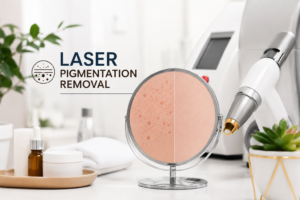
A dermatologist with appropriate training may perform or supervise procedures such as chemical peels, laser treatments, treatments for pigmentation, scar procedures, and other aesthetic interventions.
A cosmetologist, meanwhile, may focus more on non-medical beauty and maintenance services.
This is why the difference between dermatologist and cosmetologist is not simply about whether someone provides cosmetic treatments. It is also about their qualifications, ability to diagnose conditions, and scope of professional practice.
Yes. Dermatology is not limited to treating diseases.
Many dermatologists also work with patients who want to improve concerns such as:
The advantage of consulting a dermatologist for these concerns is that they can first assess whether there is an underlying skin or medical issue contributing to the cosmetic concern.
Before booking an appointment, ask yourself what problem you actually want to solve.
Choose a dermatologist when:
A cosmetologist may be appropriate when:
When you are uncertain, starting with a qualified medical professional can help determine whether you need medical treatment, cosmetic care, or both.
Understanding cosmetologist vs dermatologist can make it easier to choose the right professional for your skin and hair concerns. Although both can contribute to appearance and skin care, their training and scope of practice are different.
A cosmetologist may be suitable for routine beauty and cosmetic maintenance, while a dermatologist is trained to diagnose and treat medical conditions affecting the skin, hair, and nails.
If you are searching for a skin specialist in Kolkata, look beyond the title and verify the professional’s qualifications, experience, and suitability for your specific concern. For persistent or unexplained problems, a proper medical assessment should come before choosing a cosmetic treatment.
Neither is universally “better.” They serve different purposes. A dermatologist is appropriate for medical skin, hair, and nail conditions, while a cosmetologist generally focuses on beauty and cosmetic maintenance.
A cosmetologist may provide certain cosmetic skincare services, but persistent or moderate-to-severe acne should be assessed by a qualified dermatologist.
The main difference is their training and scope of practice. Dermatologists are medical specialists trained to diagnose and treat skin, hair, and nail conditions, while cosmetologists generally focus on beauty and aesthetic care.
Persistent, recurring, or unexplained pigmentation can benefit from assessment by a dermatologist, particularly before undergoing procedures or using strong treatment products.
If the skin specialist in Kolkata is a qualified dermatologist, they can evaluate many causes of hair loss and recommend appropriate treatment based on the underlying condition.
Yes. Many dermatologists with appropriate training provide cosmetic procedures in addition to medical dermatology treatments.
Consider the nature of your concern. Choose a dermatologist for medical, persistent, or unexplained skin and hair problems, and consider a cosmetologist for routine beauty and cosmetic maintenance.