10 Questions to Ask Before Choosing a Hair Specialist in Kolkata
Choosing a Hair Specialist in Kolkata: 10 Questions You Must Ask First admin July 28, 2026 No Comments Hair loss,...
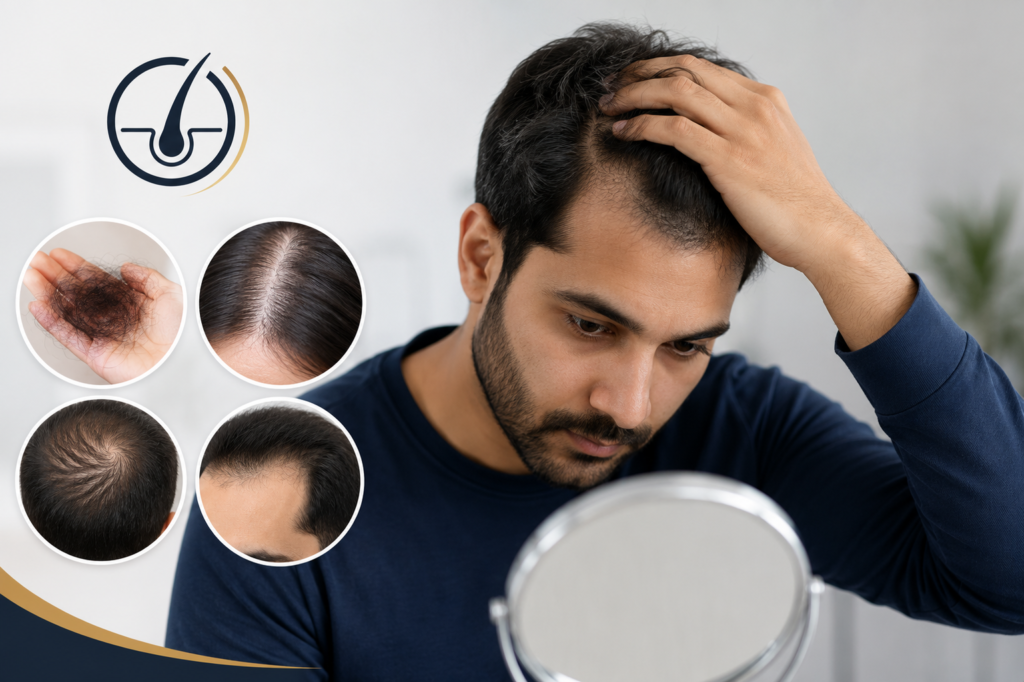
Hair loss rarely happens overnight. In most cases, your body gives subtle clues long before noticeable bald patches appear. Recognizing the early signs of hair loss can help you take timely action and improve the chances of preserving healthy hair. Whether the cause is genetics, stress, hormonal changes, or nutritional deficiencies, identifying the problem early allows for more effective treatment.
Many people dismiss the initial signs of hair loss as temporary shedding. However, when these symptoms persist, they may indicate an underlying condition that requires professional attention. In this guide, we’ll discuss the most common warning signs and explain when it’s time to seek expert advice.
Hair grows in natural cycles, and losing a small number of strands each day is normal. However, excessive shedding or noticeable thinning often signals a deeper issue.
Recognizing the early signs of hair loss can help you:
The sooner you address hair loss symptoms, the better your chances of slowing or reversing the condition.
Finding a few hairs on your pillow or in the shower is normal. However, if you notice a significant increase in daily hair fall, it could be one of the earliest signs of hair loss.
Watch for:
One of the most common hair-thinning signs, especially in women, is a widening part line.
If your scalp becomes more visible than before, it may indicate progressive thinning that shouldn’t be ignored.
A receding hairline is often among the first hair loss symptoms experienced by men, although women can also notice changes around the temples.
Common indicators include:
Hair loss doesn’t always start at the front. Many individuals first notice thinning around the crown of the head.
You may observe:
These are important hair loss warning signs that deserve attention.
Hair strands may gradually lose thickness before significant shedding begins.
If your ponytail feels thinner or your hairstyle lacks volume, these can be subtle hair thinning signs indicating early-stage hair loss.
When the scalp becomes increasingly noticeable, even without obvious bald patches, it may signal progressive thinning.
This is one of the overlooked symptoms of hair loss, particularly in individuals with naturally fine hair.
Healthy hair follows a regular growth cycle. If your hair appears to stop growing or grows much more slowly than before, it may indicate weakened follicles.
Delayed growth often accompanies other hair loss symptoms.
While washing your hair, pay attention to the amount of hair collecting in the drain.
Persistent excessive shedding over several weeks should not be ignored.
Understanding the underlying causes of excessive hair shedding is just as important as identifying the symptoms. Factors such as stress, nutritional deficiencies, hormonal imbalances, and genetics can all contribute to hair loss. If you’re unsure what’s triggering your condition, our detailed guide on hair fall reasons and effective treatments explains the most common causes and the treatment options available to help restore healthy hair growth.
Weakening follicles can produce thinner, weaker strands.
You might notice:
Although these changes don’t always indicate permanent hair loss, they often accompany the early signs of hair loss.
Genetics remain one of the leading causes of hair loss.
If close family members have experienced pattern baldness and you’re noticing several hair loss warning signs, consulting a dermatologist early can make a significant difference.
Several factors contribute to hair thinning and shedding.
These include:
Identifying the underlying cause is essential for selecting the right treatment approach.
Temporary shedding can resolve on its own. However, you should consult a dermatologist if:
Individuals looking for hair fall treatment in Park Street should seek professional evaluation rather than relying solely on home remedies, as early diagnosis often leads to better outcomes.
Healthy habits can help minimize hair loss and improve overall hair health.
While changes in hair density often happen gradually, paying attention to subtle hair thinning signs can help you seek treatment before the condition worsens. Many experts also recommend monitoring changes in hair texture, volume, and scalp visibility, which are highlighted in Vogue’s article on signs your hair is thinning.
Hair follicles can become permanently inactive if treatment is delayed for too long. Acting on the Early Signs of Hair Loss allows dermatologists to diagnose the root cause and recommend personalized treatment options before extensive hair loss occurs.
Modern treatments may include the following:
The most suitable option depends on your diagnosis and overall health.
The early signs of hair loss often appear gradually, making them easy to overlook. Paying attention to excessive shedding, thinning hair, scalp visibility, or changes in hair texture can help you identify problems before they become severe. Recognizing these signs of hair loss early gives you the opportunity to seek professional advice and improve the effectiveness of treatment.
If you’re experiencing persistent hair loss symptoms or noticeable hair thinning signs, don’t wait until the condition worsens. Early evaluation by a qualified dermatologist can help identify the underlying cause and recommend the most appropriate treatment plan to restore your hair health.