Dermatologist vs. Cosmetologist — Who Do You Actually Need?
Cosmetologist vs Dermatologist: Choosing the Right Skin Expert admin August 10, 2026 No Comments Choosing the right professional for a...
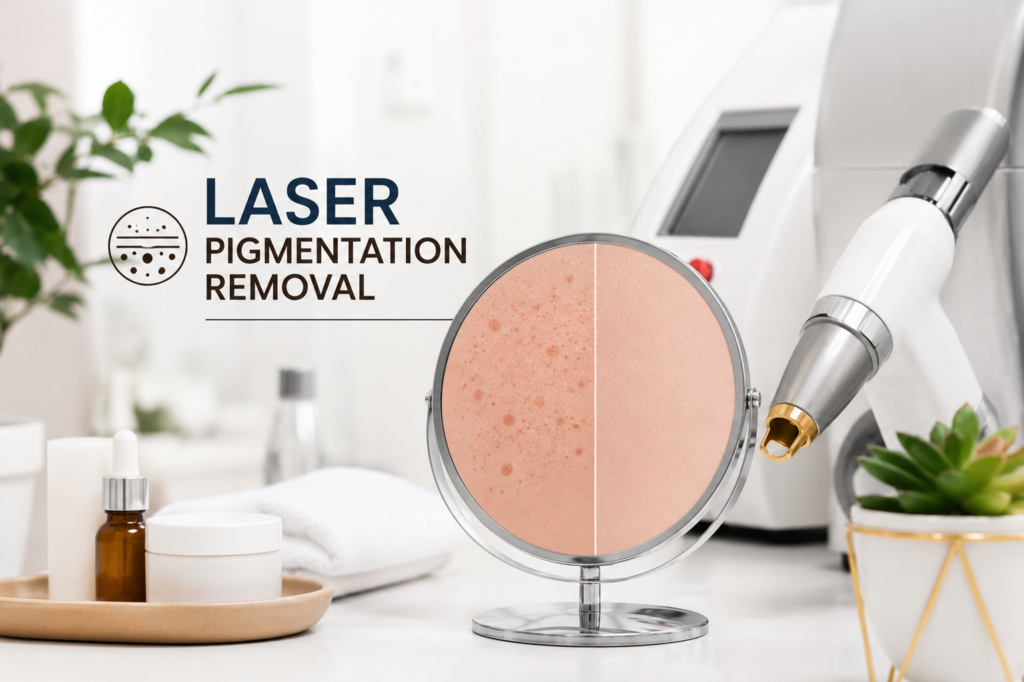
Dark spots can be frustrating, especially when they seem to disappear after treatment and then gradually return. If you have tried skincare products, home remedies, or professional procedures without achieving lasting results, the issue may not simply be the pigmentation itself. Understanding what triggers it is an important part of effective laser pigmentation removal and long-term skin management.
For people looking for pigmentation removal in Ballygunge, identifying the underlying cause can help determine which treatment approach is appropriate for the skin.
Pigmentation occurs when the skin produces excess melanin, the pigment responsible for skin colour. Several factors can stimulate melanin production, and treating the visible dark patches without addressing these triggers may result in recurrence.
Common reasons include:
This is why pigmentation removal should not always be viewed as a one-time procedure. A proper assessment can help determine what is causing the pigmentation and how it can be managed.
Sun exposure is one of the most common factors behind recurring dark spots. Ultraviolet radiation can stimulate melanin production, potentially making existing pigmentation darker and encouraging new pigmentation.
Even after a successful treatment, regular exposure to sunlight without adequate protection can contribute to recurrence.
Using a broad-spectrum sunscreen, limiting unnecessary sun exposure, and following the skincare recommendations provided by a professional can therefore be important parts of maintaining treatment results.
Kolkata’s warm and humid climate can also make pigmentation more difficult to manage. Heat, sweating, pollution, and prolonged sun exposure may increase skin irritation and trigger excess melanin production in pigmentation-prone skin. This makes understanding how humid weather affects skin pigmentation particularly important when trying to prevent dark spots from becoming darker or recurring after treatment.
Not all dark spots have the same cause or appearance. Melasma, post-inflammatory hyperpigmentation, sun spots, and acne marks can require different treatment approaches.
A common mistake is choosing a treatment based only on the appearance of the pigmentation. For example, repeatedly treating dark patches without addressing hormonal triggers or sun exposure may provide only temporary improvement.
A professional evaluation can help determine:
Laser pigmentation removal may be considered when topical skincare or other approaches have not provided the desired improvement and a qualified professional determines that laser treatment is suitable.
Laser-based procedures work by targeting pigmentation within the skin. Depending on the type and depth of pigmentation, the treatment plan, technology, number of sessions, and expected results can vary.
It is important to understand that laser treatment is not necessarily suitable for every person or every type of pigmentation. Skin type, pigmentation pattern, medical history, and previous treatments should be considered before proceeding.
Consulting a skin specialist in Ballygunge can be an important step if pigmentation is persistent, spreading, repeatedly returning, or not responding to your current skincare routine.
A specialist can assess the skin and help distinguish between different causes of pigmentation. This matters because the most suitable approach depends on what is actually causing the discoloration.
During a consultation, you may discuss:
This personalized approach is particularly important when considering procedures such as laser pigmentation removal.
Treatment is only one part of managing pigmentation. Your daily skincare and lifestyle habits can also influence how your skin responds over time.
Apply a broad-spectrum sunscreen as recommended by your skincare professional. Reapplication may be necessary depending on your outdoor exposure and daily activities.
Harsh scrubs, excessive exfoliation, and unsuitable products can irritate the skin. In some people, inflammation can contribute to post-inflammatory pigmentation.
If you are undergoing professional pigmentation removal, follow the recommended schedule and aftercare instructions rather than adding multiple treatments independently.
Picking at pimples can cause inflammation and increase the likelihood of post-acne marks.
If pigmentation repeatedly returns, consider whether sun exposure, hormonal changes, heat, skincare irritation, or another factor may be contributing to the problem.
Many people want to know whether they can permanently remove pigmentation from face. The answer depends on the type, cause, depth, and individual characteristics of the pigmentation.
Professional treatment can help reduce the appearance of unwanted pigmentation, but recurrence remains possible when the underlying triggers are still present.
Instead of focusing only on removing existing dark spots, a long-term approach should combine appropriate treatment with prevention and consistent skincare.
Consider consulting a qualified skin professional if:
A professional assessment can help you understand whether laser pigmentation removal or another approach is appropriate for your skin.
Recurring pigmentation can be frustrating, but simply treating the visible dark spots may not address the reason they developed in the first place. Sun exposure, hormonal changes, inflammation, acne, heat, and unsuitable skincare can all contribute to recurring pigmentation.
If you are considering pigmentation removal in Ballygunge, start by understanding the cause of your pigmentation and getting an appropriate skin assessment. A skin specialist in Ballygunge can help evaluate your skin and discuss suitable options, including whether laser pigmentation removal may be appropriate.
With the right treatment, prevention strategies, and consistent skincare, you can take a more informed approach to managing facial pigmentation over the long term.
Pigmentation can return when triggers such as sunlight, hormonal changes, inflammation, heat, or skin irritation continue after treatment.
Not necessarily. Suitability depends on the type of pigmentation, skin type, medical history, and other individual factors. A professional assessment should be completed before treatment.
Sun protection and gentle skincare may help prevent pigmentation from becoming worse, but persistent pigmentation may require professional evaluation and treatment.
The number of sessions varies depending on the type and severity of pigmentation and the treatment selected. Your specialist can recommend a suitable plan after assessing your skin.
Consistent sun protection can help reduce UV-related pigmentation and is generally an important part of maintaining results after pigmentation treatment.
Consider professional advice if pigmentation persists, repeatedly returns, becomes darker, or does not improve with your existing skincare routine.